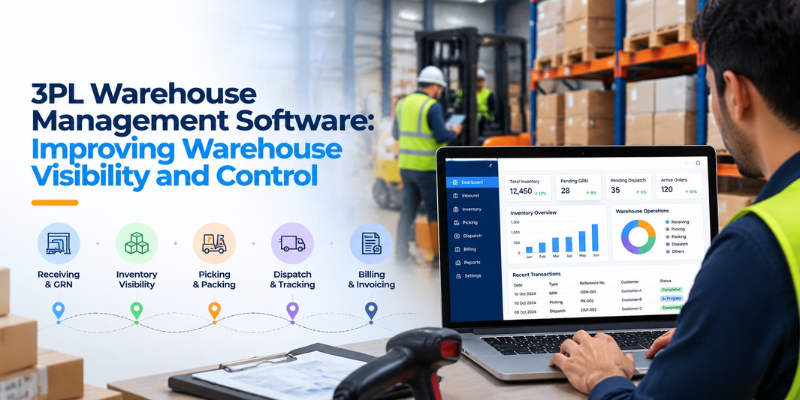
Third-party logistics (3PL) companies manage warehouse operations for multiple customers, each with different inventory requirements, storage procedures, reporting needs, and service expectations. It can be difficult to maintain clear visibility into customer inventory, stock movements, receiving, picking, dispatch, and billing activities when these processes are managed using spreadsheets or separate systems. 3PL warehouse management software enables companies to organize warehouse operations through a centralized system that connects inventory control, warehouse workflows, customer information, and operational reporting. For businesses managing multiple customers and warehouses, better visibility is essential to improve accuracy, customer communication, and operational control.
3PL warehouse management software is a digital solution that enables third-party logistics providers to manage warehouse activities for multiple customers through an organized system. Unlike basic inventory tracking tools, 3PL WMS solutions support customer-specific warehouse operations, including:
A warehouse management system for third-party logistics operations gives logistics teams better visibility into inventory movement, warehouse activities, and customer operations.
Third-party logistics providers often handle inventory belonging to multiple customers within the same warehouse. Common challenges include:
A centralized WMS helps teams organize and manage inventory information according to customer requirements.
Many 3PL operations involve multiple warehouse activities:
Without a connected system, teams may find it difficult to understand the current status of warehouse operations.
Some warehouses still depend on:
These processes can increase the possibility of:
Spreadsheets may work for simple operations, but they become difficult to manage when warehouses handle:
When receiving, storage, picking, dispatch, and reporting activities are managed separately, teams may not have complete visibility across operations. This affects:
Manual documentation can create challenges in:
Modern warehouse management software connects different warehouse activities through a single, organized workflow.
3PL teams can manage:
This improves transparency between logistics providers and their customers.
A WMS supports structured receiving workflows, including:
Warehouse teams can improve outbound operations through:
A connected system helps teams access reports related to:
| Manual Approach | 3PL Warehouse Management Software |
|---|---|
| Spreadsheet inventory tracking | Centralized inventory visibility |
| Manual stock updates | Structured inventory workflows |
| Separate customer records | Customer-wise inventory management |
| Paper-based warehouse records | Digital operational records |
| Delayed reporting | Real-time operational visibility |
3PL operators should clearly define:
Successful adoption requires:
A good warehouse management system should connect:
Store’n Ship-Fast Warehouse Management Software helps logistics teams manage warehouse workflows, including:
The platform supports logistics companies, warehouse operators, and 3PL providers looking to improve warehouse visibility through connected digital workflows.