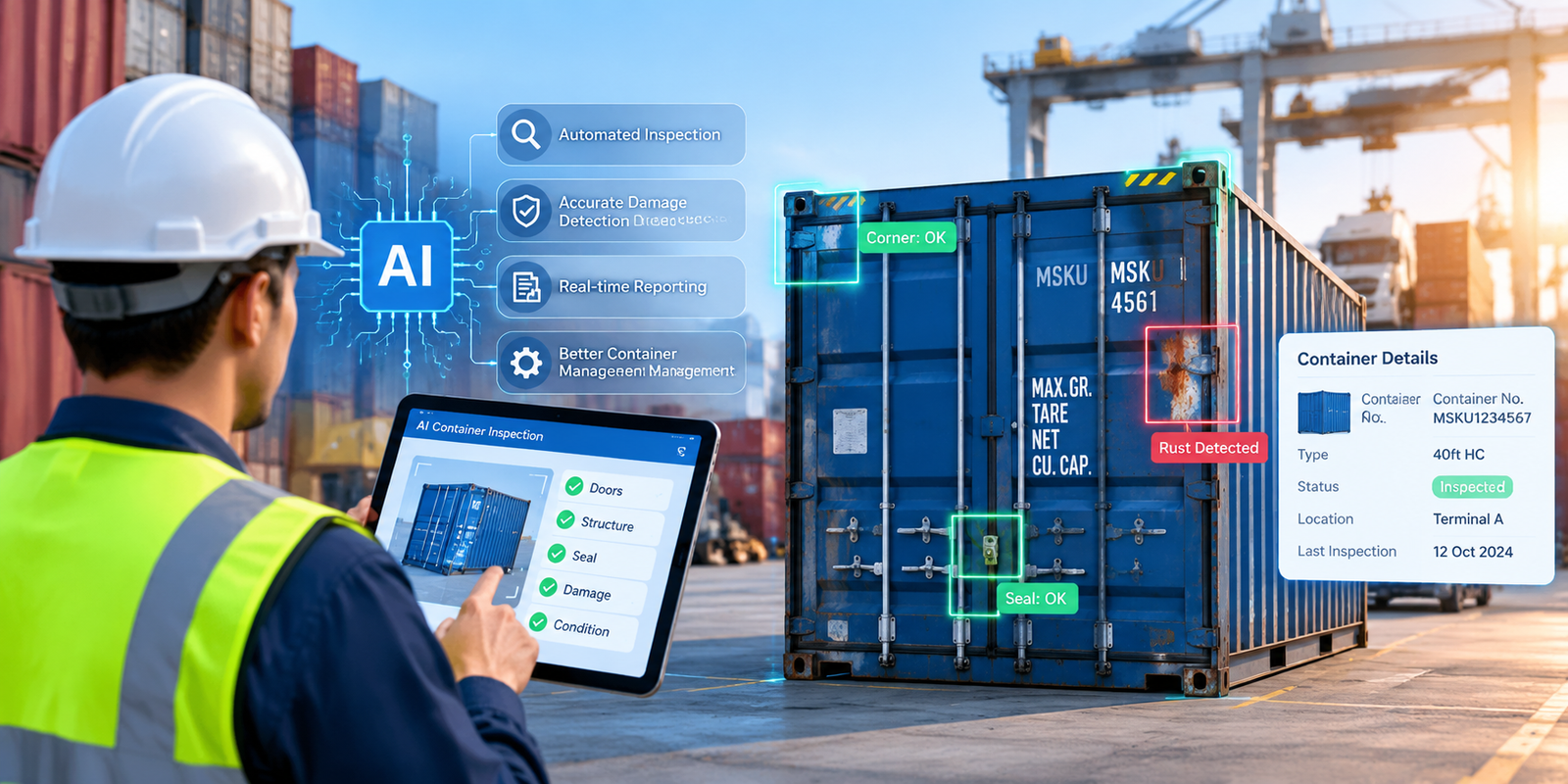
Container operations involve managing large amounts of equipment, inspection records, movement details, and other operational information across logistics networks. Manual container inspections and the lack of a connected tracking system can make it difficult for depot operators and logistics teams to maintain an accurate view of container conditions, availability, and operational status. A container management solution enables logistics companies to manage container information through structured digital workflows. With AI-supported inspections, teams can improve the way container conditions are recorded, reviewed, and managed. For freight operators, supply chain teams, and container depots, better container visibility supports improved planning, faster decision-making, and more organized operations.
Container management software is a digital solution that helps logistics companies, container depots, and supply chain teams manage container-related activities through a centralized system.
It supports activities such as:
A container management solution helps teams monitor container status, movement, and maintenance requirements more effectively.
Traditional container inspections often rely on manual examinations and paperwork.
This can create challenges such as:
Container operators need accurate information about:
Teams may have difficulty accessing updated container information when there is no connected system.
Manual processes can affect:
Paper-based inspection records can create problems with:
When inspection information, container movement data, and operational records are stored separately, teams may not have a complete view of container operations.
Reviewing previous container conditions and inspection history becomes difficult without structured digital records.
Modern container management software connects container information, inspection workflows, and operational data through a structured platform.
AI-supported inspection workflows can help teams improve:
Digital container management helps teams track:
| Manual Approach | Digital Container Management |
|---|---|
| Paper inspection records | Digital inspection records |
| Manual condition tracking | Structured condition monitoring |
| Limited visibility | Centralized container information |
| Separate operational records | Connected workflow management |
| Delayed updates | Improved operational visibility |
AI-supported inspection procedures can help companies maintain organized records of container conditions.
Digital workflows enable logistics teams to manage container activities with better visibility.
Organizations should identify:
A good container management system should connect:
Teams should define:
Successful adoption requires:
Store’n Ship-Fast offers logistics software solutions designed to support operations involving containers and depots.
The container management solution focuses on:
The system supports logistics companies, container depot operators, freight businesses, and supply chain teams looking to improve their control over container operations.