 Introduction
Managing warehouse operations requires accurate visibility across inventory, storage locations, products, containers, orders, and operational records.
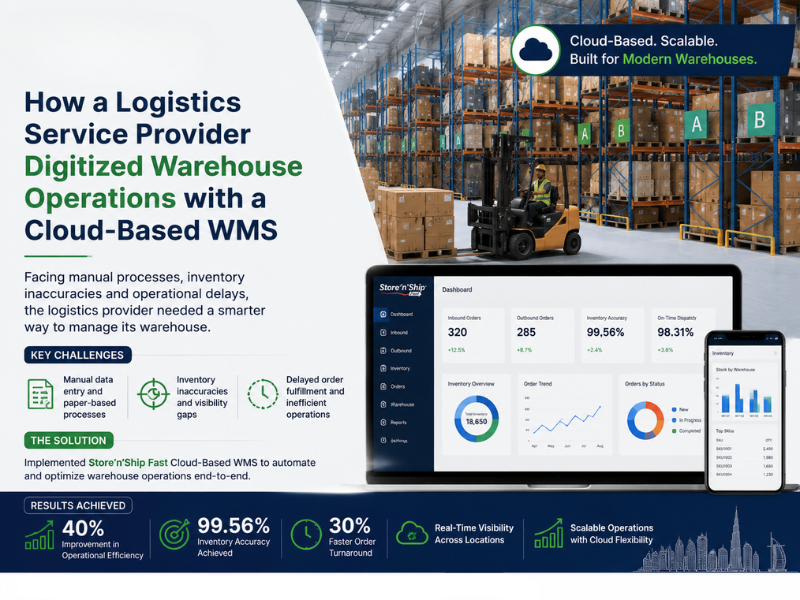
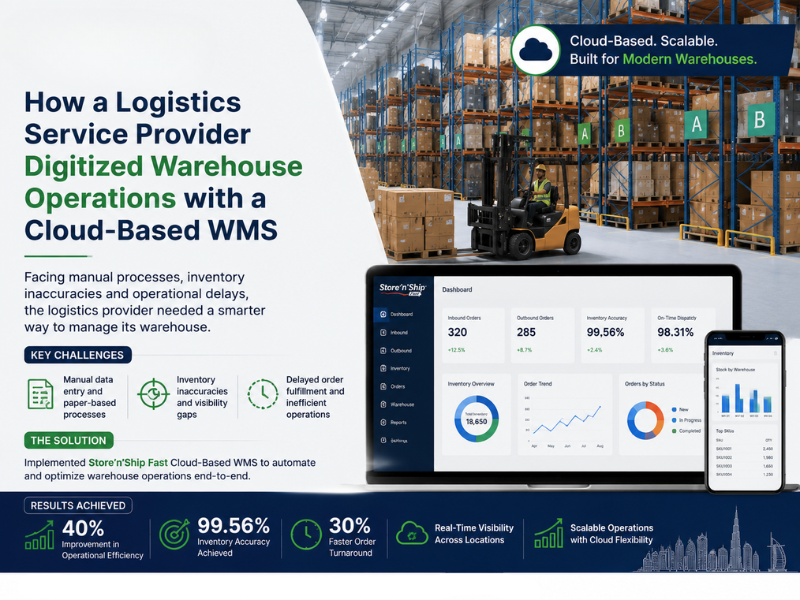
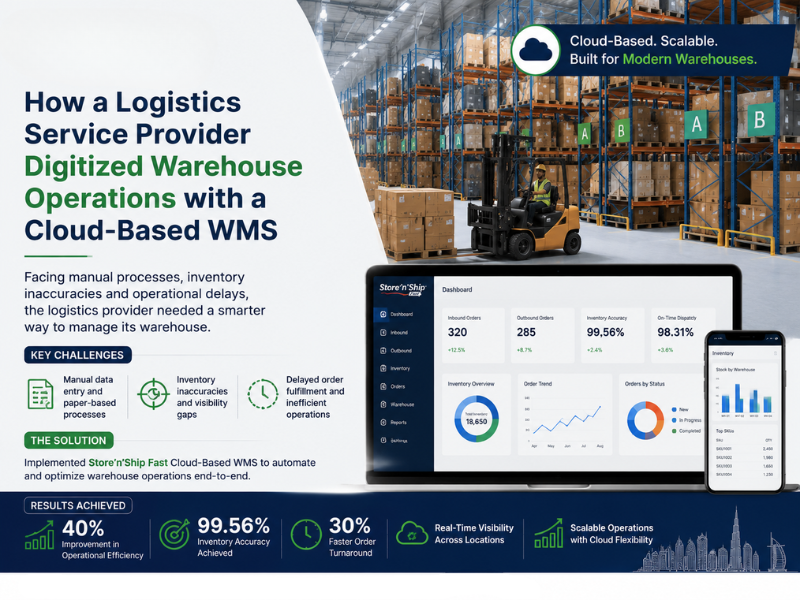
A logistics service provider needed a more organized approach to managing warehouse information and improving visibility across several operational activities, including container movement tracking, warehouse location management, product handling, stock availability tracking, sales-order processing, and reporting.
Store’n Ship-Fast implemented a cloud-based Warehouse Management Solution (WMS) tailored to meet the customer’s operational requirements. The solution helped organize warehouse data, support daily warehouse activities, and improve access to operational information.
The customer is a confidential logistics service provider operating within the logistics and warehousing industry.
The warehouse environment involved multiple operational requirements, including:
The organization required a warehouse management solution capable of supporting these workflows through a centralized digital system.
Warehouse operations depend on an accurate flow of information between inventory, locations, products, orders, and logistics documents.
The customer required improved operational support across several areas.
The logistics operation required better tracking of:
Without a structured system for managing container information, maintaining visibility across warehouse activities becomes more challenging.
The warehouse management system needed to support container tracking as part of the overall warehouse workflow.
Effective warehouse operations require accurate product records and an organized approach to managing warehouse items.
The customer required capabilities for:
A structured system was needed to maintain consistent product-related information.
The customer required better support for:
Maintaining visibility into where goods were stored was important for warehouse operations.
The customer required better access to:
A centralized approach was required to make warehouse inventory information easier to access and manage.
The warehouse operation also required support for:
These operational areas needed to be connected through a structured workflow.
| Operational Area | Before Implementation | After Store’n Ship-Fast WMS |
|---|---|---|
| Container tracking | Container visibility requirements needed structured management | Container movement and location tracking supported through WMS |
| Product management | Product information required better organization | Product maintenance and management supported digitally |
| Warehouse locations | Goods-location visibility was a key requirement | Warehouse location allocation and goods tracking supported |
| Inventory visibility | Stock information required improved accessibility | Stock-level tracking and availability checking supported |
| Order management | Sales-order processing required system support | Sales-order entry supported within warehouse workflow |
| Reporting | Operational information needed better consolidation | Data management and reporting capabilities supported |
Note: Details of the previous systems or processes were not included in the available case study information.
Store’n Ship-Fast implemented a cloud-based Warehouse Management Solution tailored to meet the customer’s business requirements.
The solution supported warehouse operations by providing structured information management and improved operational visibility.
Key capabilities included:
The WMS supported:
This helped organize container-related information within warehouse operations.
The solution supported:
These capabilities enabled structured management of warehouse product information.
The WMS supported:
This helped warehouse teams maintain visibility into the location of stored inventory.
The solution supported:
Users could access relevant inventory information through a centralized warehouse management platform.
The system supported:
This helped connect order-related information with warehouse operations.
The solution supported:
This provided better access to operational information required for warehouse management.
The implementation provided a more centralized approach to managing warehouse information.
Teams gained better access to operational data related to:
The WMS supported improved visibility into:
This helped establish a more structured approach to warehouse management.
The solution improved the organization of warehouse operations by bringing together:
The reporting and data-management capabilities supported consolidated operational information related to warehouse activities.
The solution helped bring important warehouse data into a structured digital system.
Teams gained easier access to stock-related information and availability details.
Warehouse teams were able to manage location information and goods tracking more effectively.
The system supported organized management of product and pallet information.
Reporting capabilities improved access to information related to warehouse operations.
Warehouse digitization projects benefit from clearly defining:
A warehouse management system provides greater value when it is configured according to actual warehouse processes rather than generic workflows.
Inventory, locations, containers, and operational records need to work together to achieve meaningful warehouse visibility.
Planning reporting requirements during implementation helps ensure teams receive useful operational insights.
Logistics companies managing warehouse operations often require visibility across multiple connected activities:
A cloud-based warehouse management solution helps businesses establish organized workflows and improve access to operational information.
Store’n Ship-Fast provides logistics companies with solutions designed around practical operational requirements to help manage warehouse operations.
Discover how the Store’n Ship-Fast Warehouse Management Solution can support your logistics business with inventory management, warehouse location tracking, operational visibility, and reporting requirements.
Book a Product Demo